


PC上で EAT-26 のための互換性のあるAPKをダウンロードしてください
| ダウンロード | 開発者 | 評価 | スコア | 現在のバージョン | アダルトランキング |
|---|---|---|---|---|---|
| ↓ PC用のAPKをダウンロード | Volodymyr Starovoitenko | 0 | 0 | 1.1 | 12+ |
3 つの簡単な手順で、コンピューターで EAT-26.apk を使用する方法を説明します。
EAT-26 iTunes上で
| ダウンロード | 開発者 | 評価 | スコア | 現在のバージョン | アダルトランキング |
|---|---|---|---|---|---|
| ¥100 iTunes上で | Volodymyr Starovoitenko | 0 | 0 | 1.1 | 12+ |
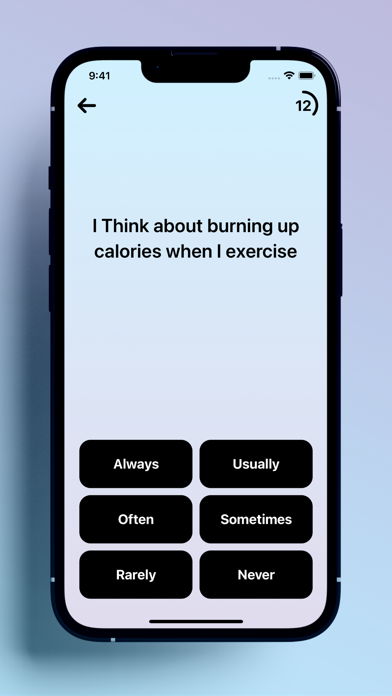
The Eating Attitudes Test (EAT-26) is probably the most widely used standardised measure of symptoms and concerns characteristic of eating disorders (Garner & Garfinkel, 1979; Garner, Olmsted, Bohr, & Garfinkel, 1982). The 26-item version (Garner et al., 1989) is highly reliable and valid. The EAT-26 alone does not yield a specific diagnosis of an eating disorder (neither the EAT-26, nor any other screening instrument, has been established as highly efficient as the sole means for identifying eating disorders). Nevertheless, many studies have used the EAT-26 as an economical first step in a two-stage screening process. The EAT-26 can be used in group or individual settings and is designed to be self- administered or be administered by health professionals, school counsellors, coaches, camp counsellors, and others with interest in gathering information to determine if an individual should be referred to a specialist for evaluation for an eating disorder. The version of the Eating Attitudes Test (EAT-26) has three criteria for determining if you should seek further evaluation of your risk of having an eating disorder. These are: 1) The total score on the actual EAT test items; 2) Behavioural questions indicating possible eating disorder symptoms or recent significant weight loss; 3) Low body weight compared to age-matched norms. The app does’t contain ads The app does’t collect personal data The app does’t contain additional payments ____ The app is not a medical instrument and is not a method for diagnosing a health condition. The EAT-26 is not designed to make a diagnosis of an eating disorder or to take the place of a professional diagnosis or consultation. The EAT-26 alone does not yield a specific diagnosis of an eating disorder. Neither the EAT-26, nor any other screening instrument, has been established as highly efficient as the sole means for identifying eating disorders. Body mass index (BMI) is a person’s weight in kilograms divided by the square of height in meters. BMI can be a screening tool, but it does not diagnose the body fatness or health of an individual.